Finally after all that hard work it came to materialize my work by editing, the soft ware used in this were Filmora, Davinchi reolve and for open source sound Pixaby. My very own productionhouse I started by creating its intro, it was RAY PRODUCTION if you cant tell already, Ray is my nick name and in some cases, my alias, I was inspired by dream works moon theme and angel choirs so, i decided to make my production house appear under descending light with angelic choirs, this represent the view or image of something heavenly in your mind, and every thing good is associated with heaven so that's why people tend to look positively to the product because the positive image is already made. In the next scene, several fade in and and fade out and straight cuts are added to enable smooth transition, these scenes are tend to be quite as the most horror of sound is defiantly the deafening silence, other than that some sound effects were added like throwing the valet, pic...
Get link
Facebook
X
Pinterest
Email
Other Apps
Camera work
To me, camera work is one of the most powerful elements that makes a media text truly engaging — especially in horror. I think it’s the secret ingredient that can turn an ordinary scene into something spine-chilling or emotionally gripping. The way a director uses camera angles, movements, and shots feels almost like a language of fear. For instance, I love how a slow zoom or a shaky handheld shot can make me feel trapped or on edge, as if I’m right there with the character. Low angles can make a threat seem towering and unstoppable, while extreme close-ups make me squirm by invading the character’s (and my) personal space. To me, great horror camera work doesn’t just show the fear — it makes you feel it. It’s like the camera itself becomes a living presence, silently watching, waiting, and breathing along with the audience.
CODES AND CONVENTIONS :
Handheld movement:
From 2:24 to 2:30, there’s this handheld shot, and honestly, I think it works so well with the atmosphere. The moment I saw it, I could literally feel the tension rising — the camera shaking made it seem so real, like I was right there in the middle of the chaos. I believe the director used this movement to make us feel uneasy, and wow, it actually worked on me. I was kind of shocked by how natural it felt almost as if I saw it coming , almost like we were seeing everything through the character’s eyes, even though it’s not exactly a POV shot. It really pulled me into the scene and made everything feel way more intense.
POV shot:
From 0:28 to 0:35, we can see a POV shot — a technique often used in horror films to engage the audience . I think this shot works really well because it allows us to step into the character’s perspective and when I say step into I real mean step into, making us experience their fear and confusion firsthand. It doesn’t just show what they see; it makes us feel what they’re feeling, which adds a layer of tension and emotional connection to the scene. In the scene above we can actually feel the building anxiety which the character feels and the sudden jump scare was also felt by the audience down to their spine that is how media producers masterfully use this shot to create a more horror environment.
Zoom in:
From 0:17 to 0:26, we can see a zoom-in shot, which has been immaculately used to highlight Pennywise’s facial expressions and makeup. I think this moment works perfectly because the zoom not only draws our attention to his eerie appearance and dance but also builds a strong sense of seriousness and anxiety which if I might add is spine chilling. It almost feels like the tension is tightening with every second, keeping us glued to our seats. This shot also creates a deeply unsettling atmosphere, hinting that something horrifying is about to happen. Along with the disturbing dance of the deadly clown this media text with the help of zoom in brings the scene and sensation the character is feeling to life. This is also why we can see zoom-in in many horror movies as it creates suspense and take our attention to the finer details.
Over the shoulder shot:
From 2:39 to 2:48, an over-the-shoulder shot is used, showing a conversation between a child and an adult in an eerie environment. I think this shot works really well because it allows us to see both the facial expressions and the body language of the characters as the dialogue unfolds and the movie continues towards the inevitable, I actually really enjoy such scenes as it also provides us with important details of the narrative . It’s a common technique used in horror genre, as it helps convey the tension, urgency, and seriousness of the moment while also forcing the audience to think what is going to happen. We can sense that something isn’t quite right, and the shot builds suspense — making us anticipate that whatever is coming next probably isn’t good most of the time it is even nerve wrecking.
Close up:
From 3:43 to 3:45, we can see a close-up shot that focuses on entirely Pennywise’s face and facial expressions. I think this shot is incredibly effective because it lets the audience see every minute detail — the twitch in his eyes, the cracks in his makeup, and the way his already horrifying smile slowly twists into something even more menacing, the very embodiment of evilness, I might even say that this fits perfectly the persona of the evil clown on which Pennywise is based upon. It also highlights the artistry of the makeup while amplifying the horror, pulling us deeper into the unsettling atmosphere of the scene. This also help suggest that something really worse is coming, his growing smile could be interpreted as a bad omen.
High angel and low angel:
At 1:59 a low angel was used to show how big and intimidating the shadowy figure is while immediately after, at 2:02 a high angel shot was used to show how venerable and weak the mother is. These contrasting angels and shots help us understand the situation and read into the scene as the shadowy figure is powerful and horrifying while the frail mother is anxious and scared.
TRACKING
From 0:00 to 0:23 we can witness a tracking short following as the boy moves on his small toy , it help us understand the path the boy is going through while also gives us an active experience due to the 90 degree turns.
Hanging Photos Gallery
✖
DEPTH IN FIELD
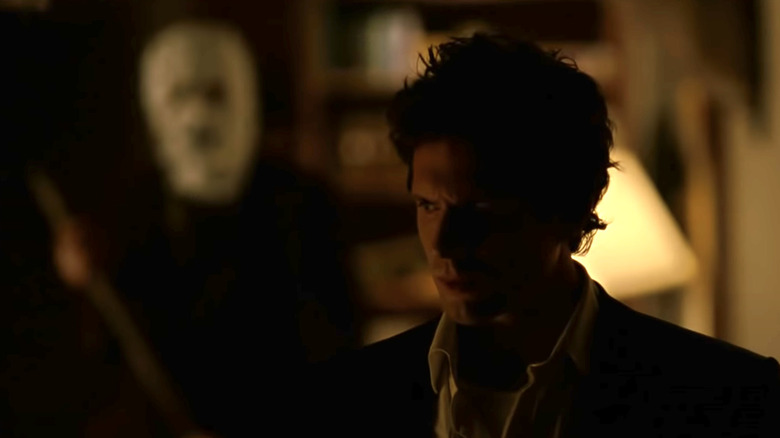
In SHALLOW FOCUS only the foreground is visible which forces the audience's gaze upon the main character to exaggerate and solidify the anxiety on the characters face and while also doing subtle attention to the blurred figure behind him thus creating anxiety for the audience as they don't know what is coming as depicted in the first image.
In DEEP FOCUS both foreground, background and the middle ground are clearly visible thus allowing the audience to focus on the minute details of the set and atmosphere, in the second picture, we can see the surrounding of the scene , the atmosphere at the moment which is dark and gloomy further taking our attention to the main characters face and expressions , the clear picture of the surrounding helps us understand that it is a daycare or kindergarten this small detail makes the scene even more anxiety inducing as the audience start to worry for the safety of the children.
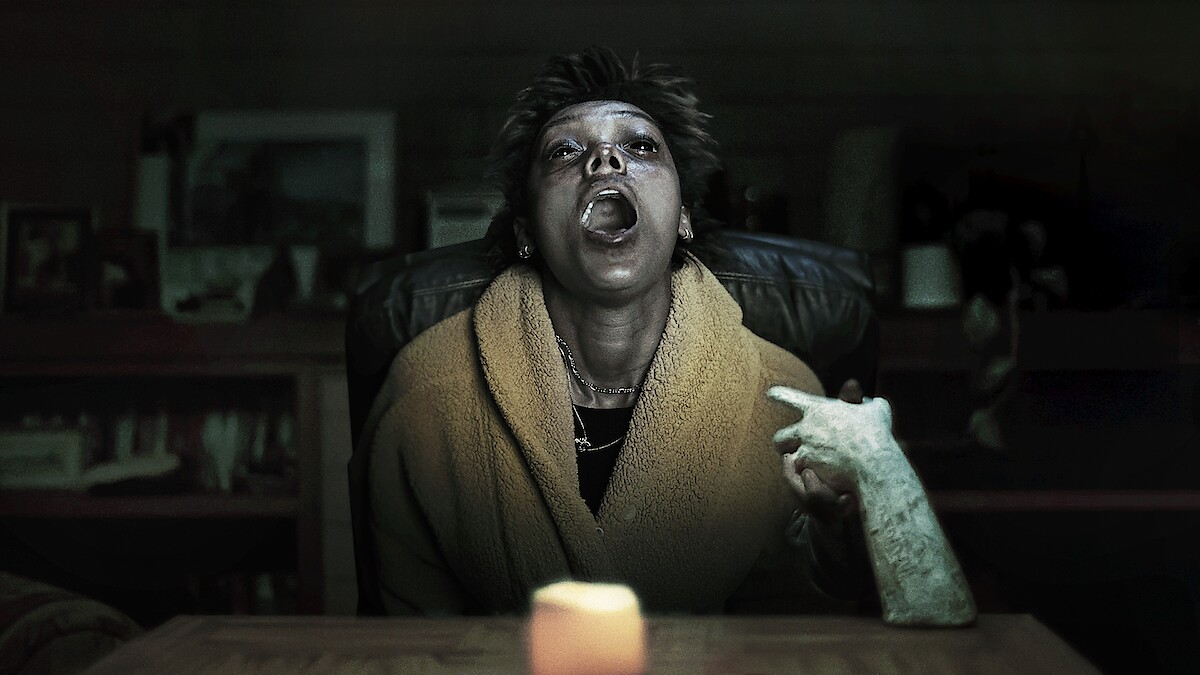
In STANDARD FOCUS foreground and middle ground are sharp but background is a little blurred , this allows the audience to focus on the dialogues and facial expression of the character while being aware of the surroundings, in the third photo graph we can clearly read the situation by analyzing the character's facial expression, he face is widen open and her forehead is sweaty, the room is dark and there is a hand on the table , all these details which we notice can help create fear in the audience heart expecting the unknow and questioning what is yet to come while clearly seeing that something is going to happen to the girl.


.jpeg)



Comments
Post a Comment