Finally after all that hard work it came to materialize my work by editing, the soft ware used in this were Filmora, Davinchi reolve and for open source sound Pixaby. My very own productionhouse I started by creating its intro, it was RAY PRODUCTION if you cant tell already, Ray is my nick name and in some cases, my alias, I was inspired by dream works moon theme and angel choirs so, i decided to make my production house appear under descending light with angelic choirs, this represent the view or image of something heavenly in your mind, and every thing good is associated with heaven so that's why people tend to look positively to the product because the positive image is already made. In the next scene, several fade in and and fade out and straight cuts are added to enable smooth transition, these scenes are tend to be quite as the most horror of sound is defiantly the deafening silence, other than that some sound effects were added like throwing the valet, pic...
Get link
Facebook
X
Pinterest
Email
Other Apps
Genre
TURN AROUND
TOO LATE
GENRE:
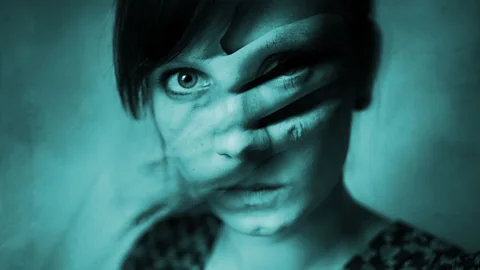
I've chosen to explore the beautifully twisted world of horror, a genre that entertains in the most peculiar way. It's an art form that finds its magic in making your heart race and your skin crawl. There's a strange thrill in the adrenaline rush that sends shivers down your spine and makes your eyes widen in fear. We scream, we jump, we cover our faces, and yet, we always come back for more. That is the undeniable power of horror.
This genre uses a masterful toolbox of codes and conventions to create its chilling effect. It often begins with isolated, gloomy settings whereno one can hear you scream. Its scenes are painted with dark colors and punctuated by the glint of a weapon. We instantly recognize the players: the vulnerable victim and the menacing villain. By tapping into universal fears of death and the supernatural, and using clever techniques like low-key lighting, sudden jump cuts, and unnerving point-of-view shots, horror crafts a world of suspense. Every creak and whisper in the sound design is engineered to build a tense, unsettling atmosphere that keeps you glued to your seat
codes and conventions:
Low-key, high-contrast lighting – deep shadows and pools of darkness heighten suspense.
Unnatural colour grading – desaturated or sickly tints (greenish, bluish) to unsettle viewers.
Unsteady camera work & extreme angles – handheld shots or canted angles create disorientation.
Tight framing & sudden close-ups – trap the audience in the character’s fear.
Abrupt editing or jump cuts – build shock and panic
Inspirations:
Anabela 2 (Horror Short Film)
I found Anabela 2 deeply unsettling; in my view it turns a seemingly ordinary home into a quiet labyrinth of dread. The story follows a young woman who returns to her house only to discover that a porcelain doll named Anabela seems to move of its own accord, appearing in rooms she knows she has left empty. For me, the true horror lies not in any single jump scare but in the slow tightening of atmosphere—the way the creak of a door or a child-like giggle unsettles before the doll’s head finally twists toward the camera. I particularly admired the careful use of sound design and abrupt jump-cuts; they make the supernatural intrusion feel both inescapable and eerily plausible.
Mime 4 (Horror Short Film)
In my opinion Mime 4 transforms something almost comical—a street mime—into a figure of pure menace. The film follows a lone pedestrian who realises he is being silently imitated by a mime whose playful gestures gradually become sinister. I found the absence of dialogue almost suffocating; every footstep and every exaggerated movement felt like a threat. For me the most chilling moment comes when the mime’s grin freezes into a mask of mockery while the lighting hardens into harsh silhouettes. That combination of silence, stark backlighting and the uncanny valley effect is what, to my mind, elevates this short into a genuinely nightmarish experience.
Don’t Look Away (Horror Short Film)
I personally consider Don’t Look Away a masterclass in rule-based suspense. The premise is deceptively simple: a teenage girl is warned by her father that a strange figure outside will move closer the moment she breaks eye contact. Watching her and her brother try desperately to keep their gaze fixed, I felt my own eyes ache; the film makes you share the characters’ tension. What stood out most for me was the brilliant use of point-of-view shots and the relentless ticking of time—devices that made me feel complicit in their fear. The monster’s power to advance only when unseen is, in my view, a wonderfully primal twist on the classic “something’s behind you” terror.
Don’t Stare (Short Horror Film)
To my mind, Don’t Stare proves that horror can thrive on the simplest of human instincts. A man who sits in front of what seems to be an empty is a start of an epically terrifying tale, at the start a man is seen setting a stool and rations of water and food to stay intron of the room without needing anything , later it is revealed that he and his family is looking for 2 people (maybe dear to them) and the man believes that they are in that empty room , he cuts himself from the outside world and monitors the room, as mornings became nights he watched, he watched without moving an inch until one night he heard cries of a baby and than he enters the room and the door behind him shuts. what I think is the true beauty of this movie is its silence which is maintained through out the movie until broken by the suddenly ominous cries of what sounded like an innocent baby slowly turning into howls of something inhumanly and the shutting of door ending creates question in the viewers mind as to what happened to him ?, is he alright? , what was in the room? these lingering questions make the audience think and engage more actively in the story thus creating an active focus and interest in the movie.
tEXt (Horror Short Film)
I think tEXt tEXt is unsettling in a way few short films manage—it blends technology and psychological terror so seamlessly it makes you question your own sense of privacy. The film follows a young woman who starts receiving texts from someone who claims to be watching her, knowing intimate details of where she is and what’s going on around her. As the messages creepily escalate, her sense of safety breaks down.
What makes it horror for me is that the menace is never fully shown; the threat is implied, possible, maybe even in her head—but it feels too real. The sound of notifications, the flicker of incoming messages at night, and silence in between—they blur the line between the viewer’s expectations and what’s actually there. What stood out especially is how tEXt uses our dependency on phones as the source of the fear. Each ping or vibration becomes a beat of panic.
When a Stranger Calls (1979)
In my view, When a Stranger Calls remains a classic because it turns the supposed safety of home into a trap. A babysitter is tormented by anonymous calls asking, “Have you checked the children?”, only to discover the killer is already inside the house. Even knowing the famous twist, I still felt a slow, creeping dread as the ordinary suburban night became a stage for terror. What stands out for me is the ingenious use of telephone silence and sudden rings—simple devices that jolt the nerves while keeping the killer unseen. For me, this film defines the home-invasion sub-genre and proves that suggestion can be far more frightening than spectacle.
Hereditary (2018)
I honestly consider Hereditary one of the most disturbing modern horrors I have ever seen. At first it feels like a raw family tragedy—grief after a grandmother’s death—but as the story unfolds it reveals a satanic cult manipulating every event. For me, the horror is both emotional and supernatural: the unbearable dinner-table tension is as gut-wrenching as the final occult reveal. I can still picture the shot of Toni Collette’s character clinging to the ceiling like a spider—an image that, in my opinion, perfectly captures the film’s blend of grief and pure nightmare.
The Babadook (2014)
In my view The Babadook is a masterclass in turning psychological pain into a living monster. A widowed mother and her troubled son are haunted by a sinister pop-up book character, but I felt the real terror came from the mother’s repressed grief and rage slowly taking shape. The scraping sound of the creature’s claws and the flicker of its tall black silhouette genuinely unsettled me. To me, the film’s genius is that the Babadook might be both a literal creature and the embodiment of unspoken trauma—which makes the horror linger long after the credits.
Rosemary’s Baby (1968)
I personally find Rosemary’s Baby timelessly frightening because it transforms pregnancy—a moment that should be joyful—into a creeping nightmare of paranoia. Watching Rosemary slowly realise her neighbours may be part of a satanic plot, I felt her isolation like a physical weight. The horror, for me, lies less in the final revelation than in the subtle manipulation that erodes her trust in everyone around her. Roman Polanski’s use of long, quiet takes and everyday domestic settings makes the supernatural conspiracy feel disturbingly plausible.
Dark Gathering
Dark Gathering, one of my more favorite horror series , and i know many will say animated series cant be horror but I cant even begin to tell them how wrong they are as this series might be animated but is without a doubt a true example of horror and it being horror is in itself is a master class achievement for the creator of dark gathering as he was able to make something animated into this horrifying. I absolutely love Dark Gathering—in my view it’s a rare modern anime that fuses eerie folklore with a creeping psychological dread that lingers long after an episode ends. The story follows Keitarō, a spirit-sensitive college student who, together with a prodigiously gifted yet unsettling child named Yayoi, confronts malevolent spirits across abandoned shrines and cursed houses. I think the series’ horror springs not only from its grotesque spectres—rendered with disturbingly intricate detail—but also from the suffocating tension of its quiet moments, when a flicker of shadow or a distant whisper hints at something unspeakable. For me, the most chilling aspect is how it entwines personal trauma with supernatural terror: every haunting feels like a metaphor for grief and guilt, which makes the fear almost uncomfortably intimate.


Comments
Post a Comment